Ontario Wildflowers- Gems in the Grasses- Photographs
Hidden gems amongst the grasses
Note: Click any picture to make full-size!
Since childhood, I have enjoyed wildflowers. I collected a series of cards (the complete collection) from boxes of tea my mother bought and I avidly sought out as many wildflowers as I could find. I wish I still had that little collection since I would treasure it even now...but alas it is a victim of history and circumstance; lost long ago in my familiy's moves.
The advent of the digital camera has been a boon for me because now I can capture my finds on camera and hopefully identify them on the net and in books. This series of Hubs on Ontario wildflowers is completely self-indulgent, but I hope you enjoy my passion with me!
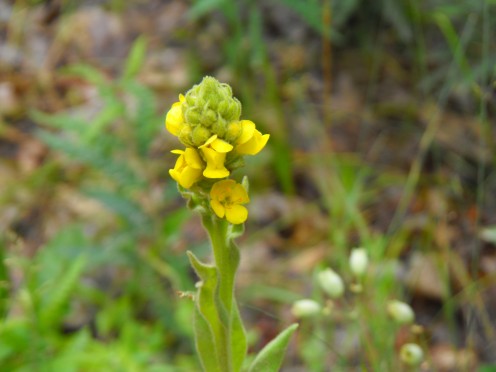
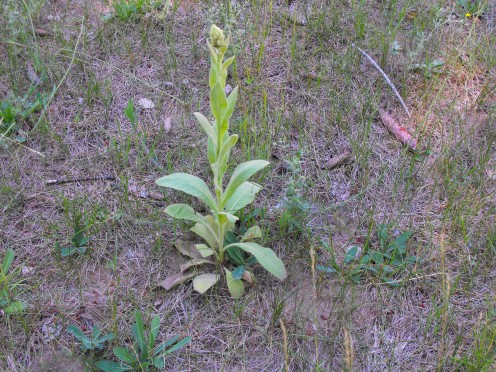
Great Mullein
I find these almost everywhere. They seem to prefer dry poor soil.The Great Mullein is found along roadsides and apart from other vegetation.
The Great Mullein is easy to identify because it is so distinct. Large, thick hairy leaves begin life as pretty rosette the first year and become a one to two metre long plant in it's second year. This flower is a biennial.
The Great Mullein's claim to fame is that the hairy leaves of this plant have been used as diapers by the natives and as toilet paper! Be warned if you try this since the hairy leaves may irritate sensitive skin...personally I think I wouldn't experiment...but if you are ever lost in the woods...just be sure you have the right plant though so you don't get a rash, which would be rather unpleasant!
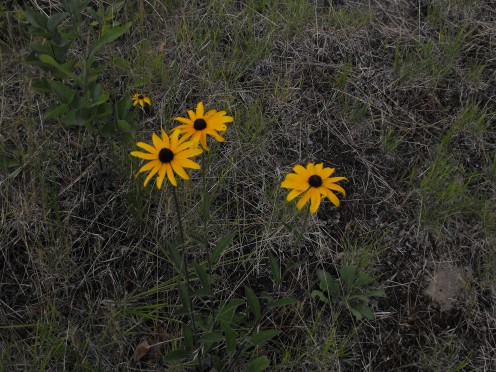
Black-eyed Susan
One of my favorite wildflowers that is also found in gardens certainly in Ontario, but I am sure every gardener wants one of these,
It is a native American plant originating in the American midwest, but now native in fields and roadsides of Ontario as well as many other provinces and across America.
The flower is a showy yellow with a dark brown centre. It is a biennial unfortunately, so in gardens it only lasts two years before new plants must be bought. The Back-eyed Susan blooms from June to September.
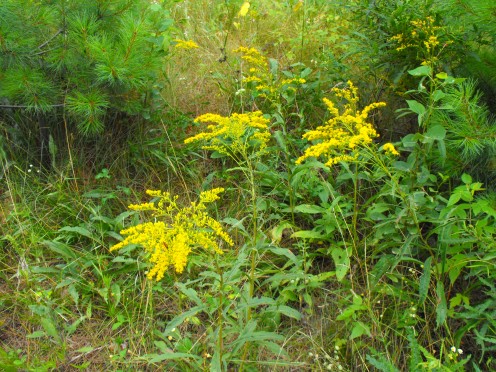
Canada Goldenrod
Canada Goldenrod is another very common native plant. it has been blamed for allergies from it's pollen but in fact, it's pollen is too heavy to be windborne so it isn't the culprit at all.
It blooms from August to September, but I caught this one blooming in the last weeks of July.
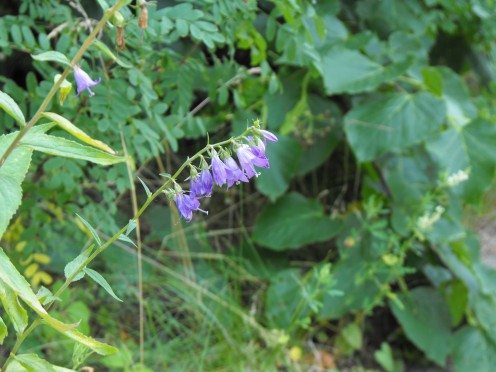
Creeping Bellflower
Creeping Bellflower is not native to Canada but is found growing wild. Once established it can become a nuisance edging out othernative plants.
The photo I have shows a rather anemic specimen, these flowers can be rather showy dark purple that would make one wish to have some growing in a garden. The blossoming time is from July to August.
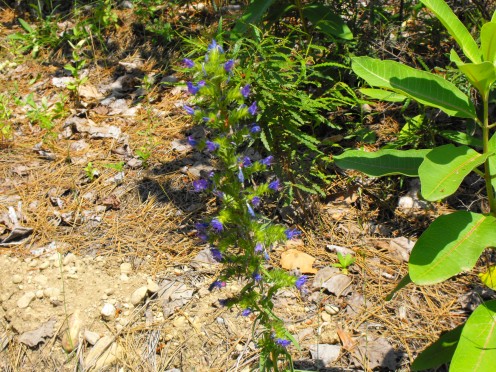
Common Viper's Bugloss
This is a flower I do not remember seeing until recently. Perhaps I just was not looking!
This plant was introduced as a garden flower to North America in the 1600's. Some people can get rashes from touching this plant, so I was fortunate that I didn't handle the plant as should you ... if you have not identified the plant.
There are many North American plants that can give rashes or worse!
Though this was brought in as a garden plant ...farmers thought it a weed by the 1800's no doubt because the hairy plant is considered bristly and I imagine grazing animals could not eat it!
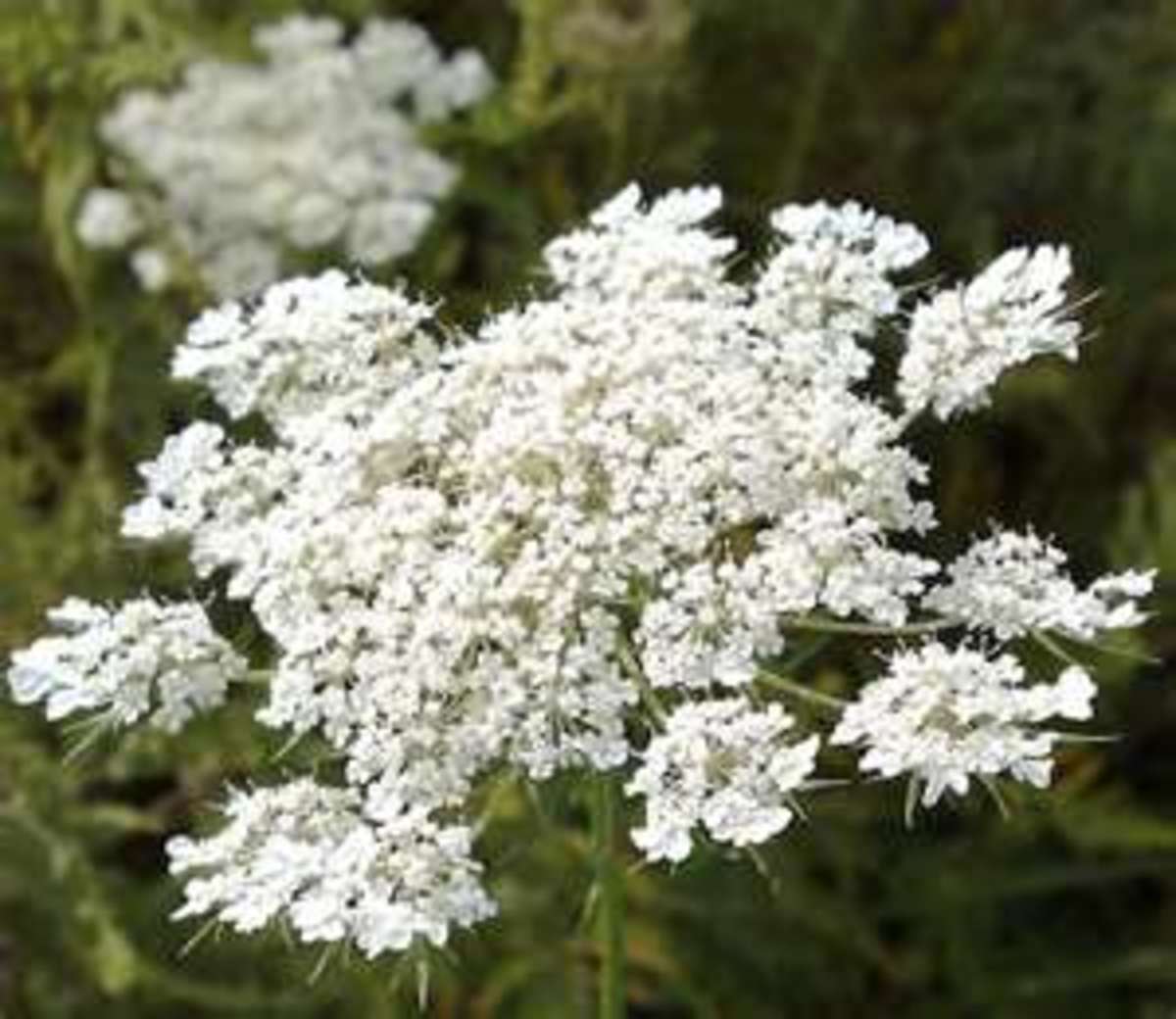
Queen Anne's Lace
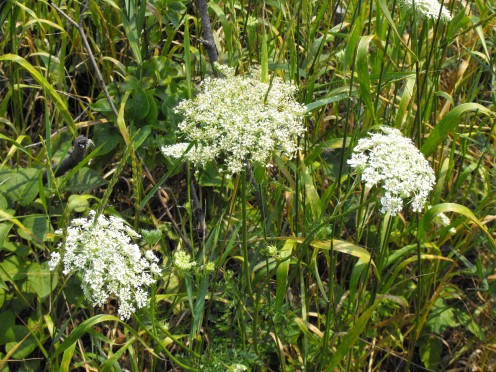
Queen Anne's Lace
Again, here is another favourite wildflower of mine. Lovely to look at as well as interesting. The beautiful flowerhead is composed of smaller flowerheads which are filled with small flowers. The effect is like lace so that is probably how this flower got it's name!
A very interesting fact is that the Queen Anne's Lace is the ancestor of our carrot plant! The story goes, that left to grow wild, the domestic carrot will revert back to it's wild state...the Queen Anne's Lace. Now I know how to attempt to get this wonderful plant into my flower garden. Wish me luck! Cool!
There are some other varieties of wildflower that look like Queen Anne's Lace and are harmful. Please consult books that clearly identify the flower, the culprit look-alikes: Common Cow Parsnip and and Spotted Water Hemlock. These plants have very different leaf structure, but the flower resembles Queen Ann's Lace! I have not found any in my areas yet.
Hairy Cat's Ear
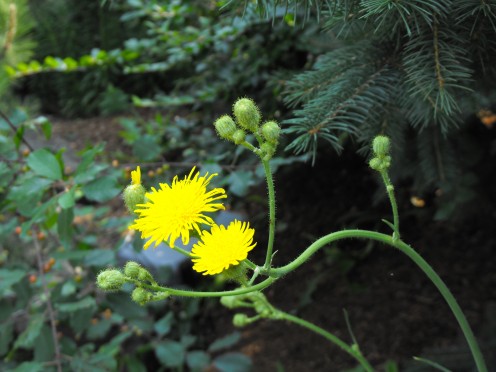
Hairy Cat's Ear
Okay here is a name that arouses curiosity? Maybe it is those hairy buds? I would have called it the "long stemmed dandelion"!
It grows 15 to 60 cm tall and was originally grown in Europe as a vegetable, so I guess vegetables used to be a lot smaller because I cannot see anything of value to be eaten! Once again I would caution against ever sampling any wild plant...many range from inedible to causing allergic responses and severe illness! I would say stick to the grocery store or the family garden!
This plant is now considered a weed like the dandelion, another very common wildflower...just check your lawn!
Bittersweet Nightshade
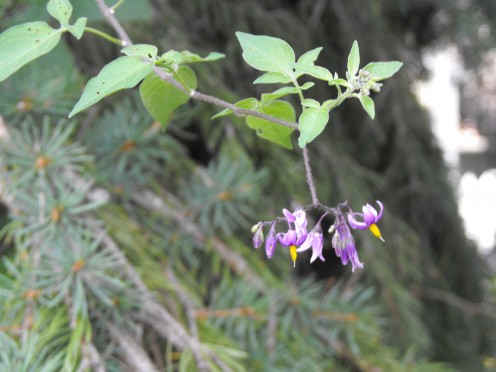
Bittersweet Nightshade
Caution...leave this plant alone...it belongs to the same plant family as the common potato, tobacco as well as tomato...but make no mistake this plant is noxious,
Bittersweet nightshade is poisonous to humans and livestock. I would venture it is equally bad for dogs and cats... yet here it was growing in the city unoticed and undisturbed!
Hoary Alyssum
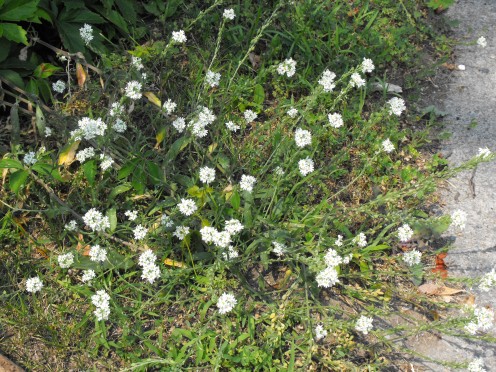
Hoary Alyssum
This plant can create huge areas of blooms blanketing fields. It's preferred habitat is dry sandy areas. Blossoming time is June to September.
The Hoary Alyssum , if digested by horses in large amounts can cause severe distress in the animals.
Spreading Dogbane
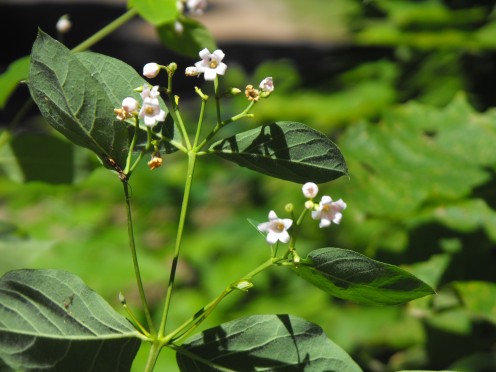
Spreading Dogbane
I remember admiring this shrub in my childhhood long before I knew the plant. since my eyesight was more accute, I was able to enjoy the appearance of the tiny delicate flowers more then than I do now!
While these tiny delicate flowers are quite lovely close-up, the flowers on the shrub look quite insignificant.
Natives used the dogbane stem fibers to create thread for sewing, making twine and even fabric.That said, the sap is poisonous and no doubt had to be treated before procesing to anything useful!
references:
Ontario Wildflowers by Linda Kershaw ISBN 13: 978-1-55105-285-4, ISBN 10: 1-55105-285-7